
Shane Hughes 3-1-26
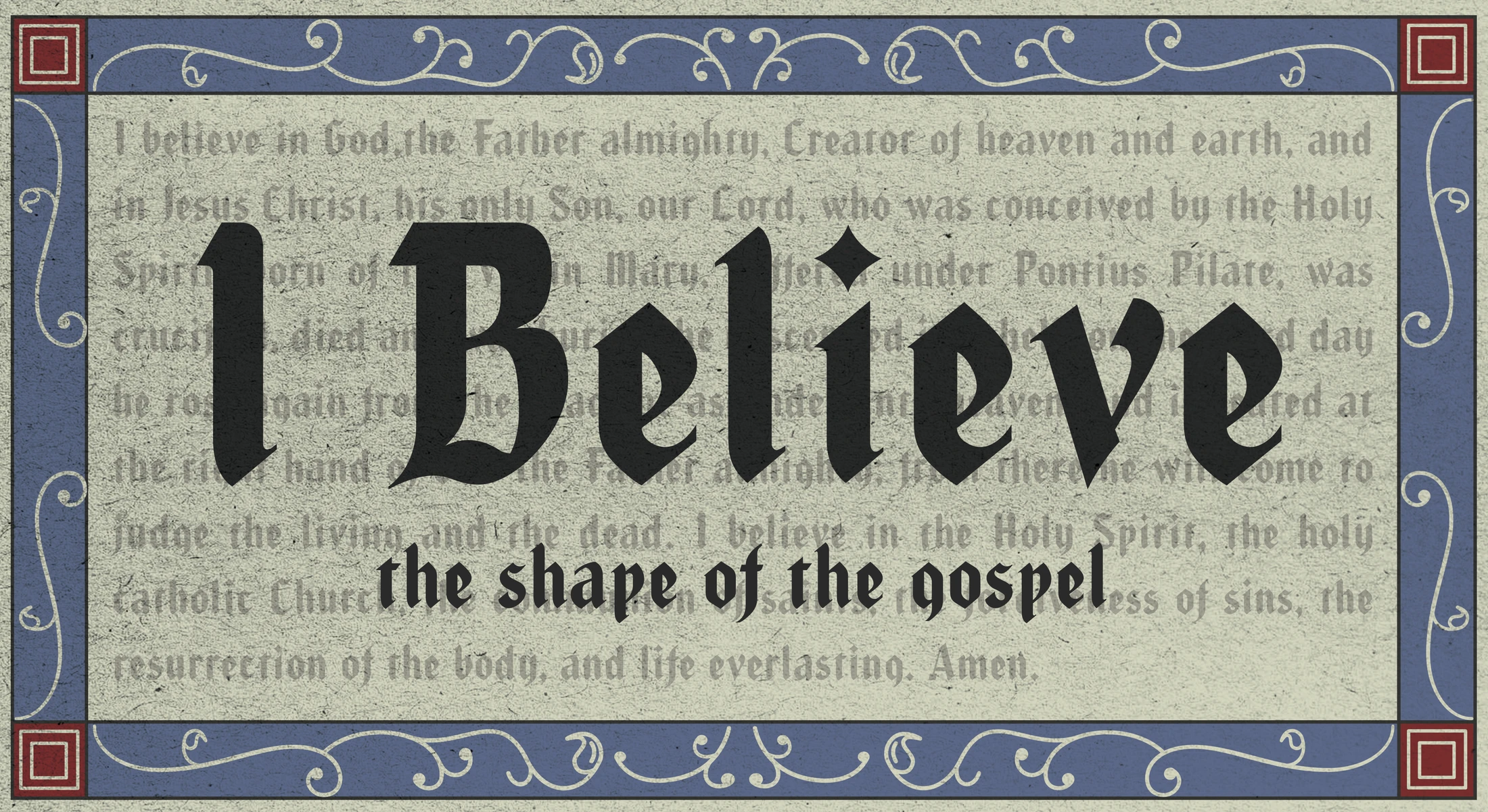
It's, it's. It's what they might have. They would have affirmed it. They would have said yes, or they would have said it as they entered into the water to meet Christ. And, and this is something that is very universal in the early church.
It's happening all over the place, all sorts of geographies, all these different churches or traditions. And there's something about this baptismal confession. The longer and longer I've been thinking about it, the more and more I like it, because I believe it was a leveling tool. And what I mean by that is this. It did not matter if you were a slave, the lowest position in a household, in a Greek household.
It did not matter if you were the most powerful Jew in the synagogue that you were attending when you met Christ in the waters and you made the same confession. There was something that happened there that made us all the same, because we were all deeply affirming our love for God and for Jesus, and we were deeply in need of God's grace. There's no one that comes with a less sin debt. When we come to the water together, we all come the same. And I believe this is what Paul is talking about in Galatians when he talks about the transformational power of baptism, where he says, there is no Jew nor Greek, there is no male nor female, there is no slave or free, but all are one in Christ Jesus.
By sharing the same baptism, by sharing one baptism, by having the same confession, we find ourselves on a level plane, in equal need of grace, equally deeply in love with God, equally committed to see God's kingdom come, God's will be done on earth as it is in heaven. Let's pray together. Heavenly Father, we're deeply grateful for the chance to gather together here this morning. And we raise our voices and our hearts and our minds with saints all around the globe throughout history, as we profess and reaffirm and proclaim that your son Jesus is Lord, Lord of our lives, Lord of creation, Lord of, Lord of everything. And so, Father, tune our lips to sing your praise, tune our hearts to love what you love and see the world the way you see it.
Tune our bodies to glorify you. And now, as we prepare our hearts and our minds for preaching to hear your word, I pray that you pour through me the gift of preaching that I might speak your truth and love to these, your people. It's together that the Church says Amen. So we're in Psalm Chapter two. And what I want you to realize is what happens after the resurrection of Jesus.
Christ that is phenomenal and kind of in Jewish history is that is that people like Paul and others like him begin reading the Old Testament through the lens of Jesus Christ. Paul and many others would have been very familiar with Psalm chapter 2. Jesus probably had it memorized. He knew what it said. But when they read it, the original author writing this prayer for the first time is kind of musing, I think, about the other nations and the powers of this world.
If you have your Bible, you can open it to it. But basically he says, like, I look at all these other nations, I look at all these kingdoms, and they kind of conspire with one another. They're trying to agree with one another how they might overthrow the power of God. And God says, you can't. But my son, I've established him in Zion, I will give him everything.
The song opens with the nations raging against the Lord and his Anointed. And in the original reading, I think that Anointed probably was a king of Israel. But after the resurrection, there's this new lens that we begin to read the Old Testament with. And we realize it's not just a king, it is the king, it is Jesus, God's anointed. And that word anointed in the Hebrew, it's the same root as the word Messiah, which in Greek is the word Christ.
And so when, when the Apostles Creed, when we say Jesus Christ, it's making this kind of royal coronation claim that Psalm 2 is making. We're saying, Here is the king. Psalm 2 sets this up perfectly. The Creed isn't saying, you know, first name Jesus, last name Christ, like you might say, you know, first name Elliot, last name Hughes. What he's saying is that Jesus is the anointed king, and it's the one that the author has been writing that's been looking forward to.
And so in verse seven, God says, you are my son, and today I have become your Father. And this is what we draw on when we call Jesus his only Son. The early church read this psalm as a coronation oracle, fulfillment filled in Jesus. That New Testament writer is quoted everywhere. You see it in Acts chapter four, and you see it in, excuse me, Acts chapter 13 and Hebrews chapter one, Revelation chapter two.
What it's trying to do is connect his Son, our Lord to the sonship language. In the New Testament, the kings of the earth set themselves against the. The Lord's anointed in verse 2. And in the Creed, they specifically named one ruler, one governor. His name is Pontius Pilate specifically.
And the early church noticed this and Acts chapter four directly quotes Psalm chapter two and applies it also to Herod and Pilate and the Gentiles and the people of Israel conspiring against Jesus. And the specificity there of calling out Pilate's name isn't just a historical detail because it identifies the moment when the nation's rage reached its climax. The crucifixion is the fulfillment of the Psalms conflict. I need to be honest with you. Pilate was not a particularly famous or important governor in terms of the story of the Roman Empire.
He's kind of in the middle of the Roman Empire. He works in this backwater place called Israel. It's not even that important. He doesn't reign for that long. He doesn't do very much that's that significant.
It would be kind of like, in fact, if you weren't like a real deep historical nerd, if it wasn't for Jesus, you would not know his name. It's kind of like the, I don't know the mayor of Sweetwater in the 1960s, like none of us know his name. Probably one of you is actually related to them. You're going to find me afterwards. Like, I'll tell you who it is.
I'll tell you this because we looked it up. There were 10 mayors in the 1960s in Sweetwater. Nobody knows what was going on there. But one year after another, they just found a new mayor. I don't know, but nobody cares is the point because there was no significance there.
If it wasn't for Jesus, nobody would know his name.
But because he was engaged in the crucifixion, we say his name. And the psalm ends not with the raging of the nations, but with the sun installed on Zion and given the nations as inheritance. If you remember in Matthew and Luke, there's the story of the temptation of Jesus. It's the moment where the Satan comes and tries to convince Jesus to do ministry a different way. And he makes this promise.
If you will just bow down and worship me, I will give you all the nations of the earth. They weren't his to begin with. That was God's to give as an inheritance to Jesus.
So here's the thing you need to hold when we think about Jesus.
Jesus is both fully human and fully God.
Psalm 2 is saying is that Jesus is Lord and Messiah.
And if we're going to be honest about Christianity, I think this is the point where people begin to turn away. Whether they realize it or not, this is the point where they begin to turn away. And this isn't true for us now in the world we live in. This is true historically as well. About 200 years after Jesus resurrection, there were the Arians that began to kind of take place.
And they loved the idea that Jesus was God, and they loved the perfection of Jesus and they loved kind of that Platonic ideal of a loving God. What they didn't like was the fact that. That Jesus was also flesh, because that was messy and that was dirty and that was human and that was corrupt. And there was all these things about bodies that they didn't like. And so they chose to focus on Jesus as God and try to deny that Jesus was human.
And the church said, no, it's not the way it works. There were others about the same time that could believe that Jesus was a human because there were eyewitnesses that saw him. He walked, he ate, he slept, he did all of those things. What they had trouble believing was that he was God from the very beginning. And so they imagined that God sort of adopted Jesus.
God looked down and saw Jesus and said, hey, you're a human being, but you're doing this better than everybody else. So I'm just going to promote you to God. They couldn't believe that he was born God and human. And the church heard them and said, that's not how it works either.
And I think. I think in our modern lives, we do struggle with this as well. I grew up in Denver and I grew up in this fantastic church, and. But what you have to know about Denver is if, when I go back now, years later, most of the churches in Denver are struggling. There aren't very many churches of Christ in particular, but churches in general that are really thriving right now in Denver, it's becoming a more and more secular city.
The churches are strong. They're just. They're 80, 90, they're 100 people. They're doing the best they can with what they have. And part of the reason for that is the secularism around that is creating this system where it's very easy to reject Christianity or to reject Jesus.
In fact, if you want to kill a conversation, if you want to end a. A date really quickly in Denver, you want to. You just ask them, like, hey, can I talk to you about Jesus? Have you considered him as your Lord and Savior? And it's over, right?
They don't want to hear that. They're not interested in that. That doesn't sound like something they're curious about. Now, I do hear stories that that is beginning to change in the city as the secularism kind of goes to its extent. People are now curious and hungry and interested about what Christianity might offer.
The thing that's interesting to me about it is in Denver, you're just going to get a flat. No, you're going to get a rejection. They're not going to. The conversation ends right there in Abilene. It feels like you get, oh, yeah, yeah, Jesus is great.
You know, I went to church when I was a kid, or they say, I go to church now. I said, oh, where do you go? I go to Highland.
What do you think of the preacher? I'm not telling that story.
I do. I do think that Jesus is the deal breaker for people when it comes to Christianity. And it might be because they can't believe that Jesus was God. It might be they can't believe that God would become human.
But I think more often than not in our culture, in our society, it's because they don't want to believe that Jesus is Savior, or they don't want to believe that Jesus is Lord.
If Jesus is Lord. If Jesus became king, if Psalm 2 is right about the resurrection of Jesus Christ, if it's right, then a king implies that we have to do what the king says. And if Jesus is king of kings, king of the entire universe, the creation of the world, then you cannot look on the face of Jesus and say, nah, you have to do it.
And I think at times people look at that and say, I don't want to.
The difference between Denver and Abilene is the people that say, I don't want to. Don't go to church.
I don't even have to finish that sentence. And you know where I'm headed. Holiness is part of what it means to be Christian. Not that we're perfect. Not that we always get it right.
Not that we're not making mistakes constantly around us, but that we strive together to look a little bit more like Jesus. That we strive together to live by the principles that Jesus taught, that we strive together to embody what Jesus was like on this earth. I think some of us would love to have a savior. We want a savior that will cover our sin, handle the guilt. But we don't really want a Lord who has claim over our lives.
We don't want a king. We'd rather have a mascot. We'd rather have a mascot that blesses what we want to do anyway. We'd rather have a mascot that affirms our decisions, whether it's personally or locally or nationally. We just want a Jesus that smiles from heaven and Says, yeah, go for it, Cheer you on.
That's not who Jesus is.
And I don't think there's a better place that holds this tension better than John chapter 11. It's the story of Lazarus. Now, we're not going to read that story. I'm going to tell it to you quickly. But if you want to, this afternoon, you can open up your Bible and read John chapter 11.
You can see what I'm going to tell you right now. You can read it for yourself. In John, chapter 11, Jesus has these friends, Mary and Martha and Lazarus and Mary. They're all siblings and they live together in Bethany. And Jesus eats with them, hangs out with them all the time.
He has this conversation about Mary and Martha and who belongs in the kitchen and who belongs at Jesus feet. You can read that for yourself. But there's this moment where Jesus is about a day's travel outside. He's away from Bethany, and Lazarus gets sick. And so Mary and Martha send word, send a messenger to travel a day's travel to get to Jesus to tell him that Lazarus is sick.
Now, this is not just a cold. This isn't the flu. This is something very serious. This is. Lazarus is going to die.
And Jesus hears the news and he thinks to himself, okay. And then he stays where he is and he keeps working. And the apostles are kind of wondering what's going on. The disciples are like, shouldn't we go and help Lazarus? Isn't this.
Isn't he your friend? And as Jesus is heading back to Bethany, he tells them pretty plainly, Lazarus has already died.
So why are we going, Jesus, if you know this, why didn't we go earlier? John Chapter 11 is one of those most theologically dense passages in the Gospels, precisely because it holds Jesus, divinity and. And humanity in such sharp tension, which maps directly into kind of what we confess together as a body. And so Jesus gets to Bethany and the sisters meet him. And Martha says, jesus, if you had been here, you could have healed my brother.
You could have saved him. And Jesus says, I'm going to raise your brother from the dead. And Martha misunderstands. She says, oh, I know on the last day, on the day of resurrection, we. We will all get to see Lazarus again.
And Jesus says, wait, I. I am the Resurrection.
And then he asks to see the tomb.
And he goes to the tomb and he asks for the door to be opened. And people say, lazarus has been in there for a while. You don't want to. You don't want to open that door. It's going to smell.
And here's the humanity of Jesus.
Jesus cries, he weeps. He is greatly troubled in spirit. That's verse 33. And he asks where Lazarus has been laid, as if he doesn't already know. And he arrives too late, so it seems.
And then the Apostles Creed, it says that Jesus was born of the Virgin Mary and then died under Pontius Pilate. And there's nothing that it says about the middle of his life except that he suffered. That's all the Creed says about the life of Jesus, that he suffered. And we see this clearly in this moment. He entered into our world fully.
And John 11 shows what that looks like in practice, is that he grieves when with us, he's not a deity performing a detached miracle from a safe distance. This is no Greek God looking down from heaven, zapping somebody into good fortune or ill.
So Jesus has this fully embodied humanity. Jesus also has a fully embodied divinity. Jesus says, I am the resurrection and the life. Not I will bring the resurrection, but I am it. And this is the most direct claim in the Gospels to that kind of divine identity.
When the Creed says, his only Son, our Lord. And then Jesus in a moment commands a dead man to come out of the tomb with a word. And he prays, not because he needs the Father's help, but for the benefit of those standing there. He already is in complete communion with the Father. And so the structure of the story kind of mirrors the Creed's own story, the Creed's own structure.
Mary and Martha greet him with the words, lord, if you'd been here, my brother would not have died. But they believe he could have prevented his death. But the story reveals that he is Lord over death. The phrase Our Lord is not a title of respect. It is a confession about who has authority over every enemy, even the final enemy.
But there's still a moment in John chapter 11 that should stop us cold. It's this moment where Jesus is standing outside of the tomb of his friend, and he knows what he's about to do. He knew what he was about to do back two days ago when he said, okay, let's head back into Bethany. He knows what he's about to do. In a matter of minutes, he will speak a single sentence that will unravel death itself.
And he holds in his hands, so to speak, the power of resurrection. And he is weeping. This is not performative Greek grief. It's not offering a pastoral nod of sympathy before getting on to the miracle so that we know how to provide pastoral care to somebody that's Weeping, the Greek word that John uses is the shortest verse in the Bible in English, and it is raw. Jesus wept.
This is an ugly cry. Not one little tear coming down the side of his face. This is full snot coming out of Jesus nose, grieving the loss of his friend. And the people that are standing there with him, who have already seen him do extraordinary things, already seen him exorcise demons, already see him heal the sick, already see him speak and feed the crowds. They said something remarkable.
They say something, see how he loved him. They don't say, see how powerful he is. They say, see how he loved.
And I think we're drawing close to the mystery at the heart of the incarnation. I think we're understanding what Jesus is asking us to confess. When we say Jesus is God's only son, our Lord, we are saying something about cosmic authority. We are talking about the sun installed on Zion, the one whom the nations are given as an inheritance, the one whom before kings are warned to tremble. And when we say he was born of Mary and suffered under Pilate, we are saying he stepped away from all the way into human skin and human loss and human tears.
And the reality is he is both of those things at once. Not God pretending to be human, not a remarkable human being that has been elevated to divine status, but the one in whom, as the early church longed to say, leaned in to say the two natures held together without confusion, without separation.
He is Lord, and he weeps for his friend, even though he knows he's about to raise his friend from the dead. Even though he knows in John chapter 11 that the act of him raising his friend from the dead is going to cost him his life. Because performing a miracle this close, this powerful to Jerusalem and is going to alert the authorities and they're going to become keenly aware of who Jesus is, coming this close. Raising us from the dead is going to cost him his life, but he does it anyway.
Maybe you think of it this way. There's an old story about Abraham Lincoln, and he's visiting a hospital during the Civil War, and he's walking through the wards of the wounded soldiers. Now he is commander in chief. At the time, he was the President, presiding over the worst time in America's history so far. And you've seen pictures of presidents before their term and after their term.
You can see the pictures of President Lincoln before his term. And then I made a mistake at first. I said, and after his term. And then Randy came up. He's like, well, after his term, he was dead.
So I imagine, yeah, he did look worse. But toward the end of his life, and you can see how much Abraham Lincoln ages that time.
He's a man who held the fate of the nations in his decisions, who carried the weight of hundreds of thousands of lives in the strategy of war.
Yet witnesses describe, as he's moving through this hospital, of stopping bed by bed, speaking a word of kindness to the soldiers, sometimes sitting there holding their hands, sometimes weeping, sometimes saying nothing at all. His power as president did not make him distant. If anything, those who saw him there said it made his presence more overwhelming, not less. Because here was a man who could have insulated himself from all of this, yet he chose not to.
Now, that illustration, that story only goes so far because Lincoln was not a sovereign over death.
But the point holds and then multiplies beyond measure when we apply it to Jesus. Jesus did not have to weep. He knew Lazarus would walk out of that tomb. He could have arrived, dispatched the miracle efficiently and moved on. He could have done it from wherever he was before when he heard the word.
But instead, he stood in grief with Mary and Martha, and he just let it land on him. He wept with those who wept before he called forth the one they were weeping over. And I want you to realize, Highland, that this is the Lord Christianity is asking you to confess. Not a distant sovereign who wishes decrees from a safe remove, but one who stood at the graveside, the one who knows what grief sounds like and feels like because he has wept himself. The one who is the resurrection and the life is also the one who wept at the tomb.
The one who is cosmic King also knows your name.
And I think that if we together, I think if we can get Jesus right, if we can understand who Jesus is and that spills into our lives. The way we love each other, the way we care for each other, the way you treat your neighbors and your family.
I think we might become something that God intends us to be.
And it begins. It begins when we meet Christ in the water. We all meet Christ at the same place. We all meet Christ in the same status, in desperate need of grace, longing to be made full.
So it begins in our confession. So just a moment. I'm going to invite you to stand, and we're going to say the Apostles Creed together. I think there's some power in this, and I think I've been hearing from many of you that there's power in saying what we believe together. And if you're not there yet because you're not sure of Jesus, then just stand with us, but you don't have to say it.
I don't want you to make a confession you're not ready to make yet. But if you're ready, then join us in what we say. And I'm going to remind you one more time, just because I've had a couple emails about it this week, that when we get to the part about the Catholic Church, that's the little C Catholic, not the big C. We're talking about the universal church, not necessarily the Roman Catholic Church. But I understand that if you come from a place of some hurt and some woundedness, that that might be difficult for you to say. So.
So you can say the word universal if you'd rather say that word. We choose small C Catholic because that's the tradition and we want to be a part of that. But would you please stand and say the Creed with me?
I believe in God, the Father Almighty, creator of heaven and earth, and in Jesus Christ, his only Son, of our Lord, who was conceived by the power of the Holy Spirit and born of the Virgin Mary, suffered under Pontius Pilate, was crucified, died and was buried. He descended into hell, and on the third day, he rose again from the dead, ascended into heaven. He is seated at the right hand of God, the Father Almighty, and from there will come Jesus to judge the living and the dead. I believe in the Holy Spirit, the Holy Catholic Church, the communion of saints, the forgiveness of sins, the resurrection of the body and life everlasting. Amen.
Go in peace.